
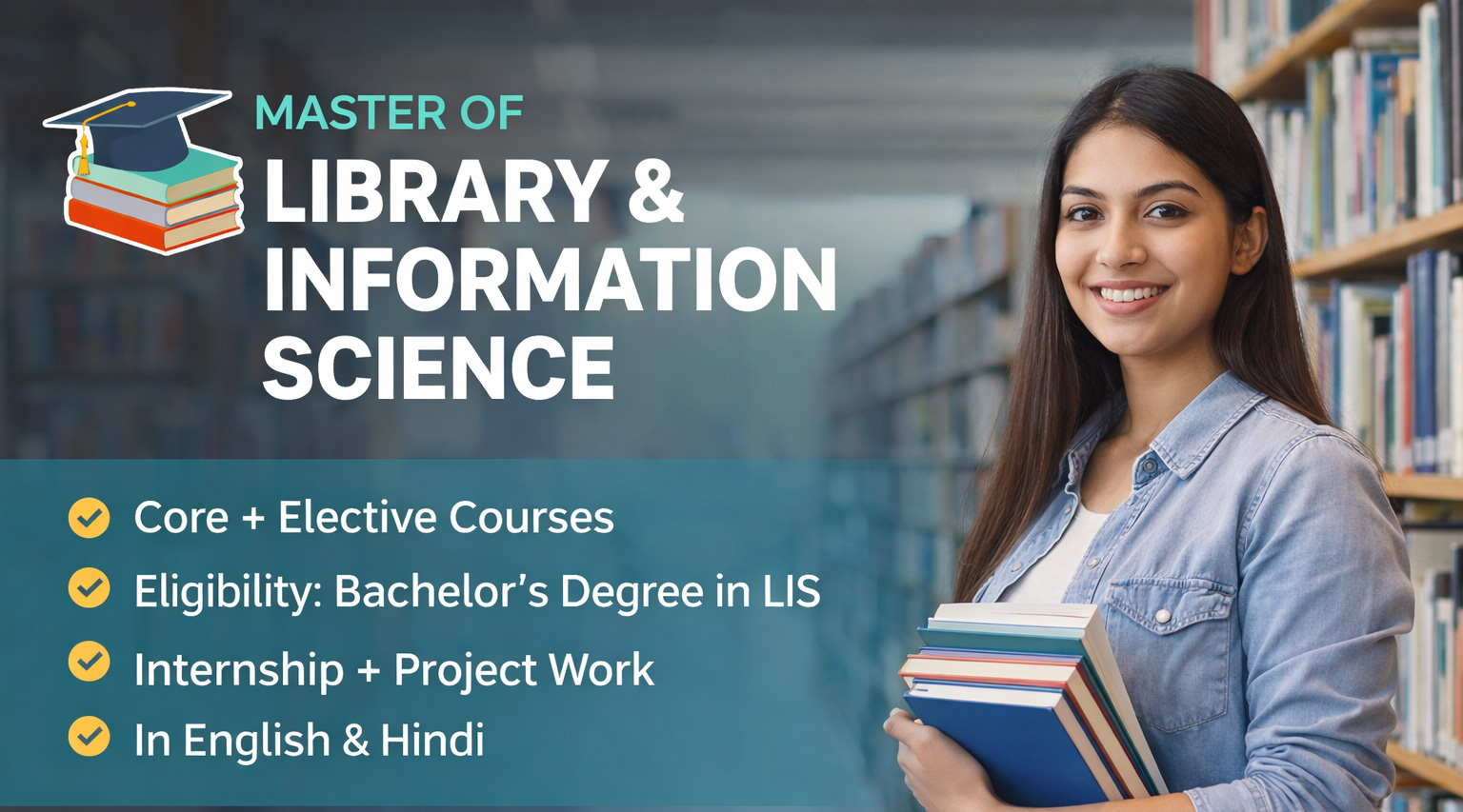
Master of Library and Information Science (MLIS) – Complete Guide
The Master of Library and Information Science (MLIS) is a postgraduate program designed for students who want to build a professional career in libraries, information centers, research institutions, and digital knowledge management. This program focuses on developing skilled professionals who can manage, organize, and provide access to information efficiently.
Objective of the MLIS Programme
The main objective of the MLIS programme is to develop professional human resources capable of handling modern information systems in libraries and information centres. With the rapid growth of digital information, libraries require trained professionals who understand information organization, retrieval systems, and modern information technologies.
Eligibility Criteria
To apply for the MLIS programme, candidates must have:
- A Bachelor’s Degree in Library and Information Science
- Associateship from NISCAIR or DRTC

Medium of Instruction
The course is primarily taught in English. However, students are allowed to write assignments and Term-End Examinations (TEE) in Hindi as well.
Programme Structure
The MLIS programme includes Core Courses and Elective Courses. Students must complete 40 total credits to earn the degree.
Core Courses
The compulsory courses focus on fundamental knowledge and professional skills required in the library and information science field.
Key subjects include:
- Information, Communication and Society
- Information Sources, Systems and Services
- Management of Library and Information Centres
- Information Processing and Retrieval
- Fundamentals of Information Communication Technologies
- ICT Applications in Libraries
- Project Work
- Internship
These courses help students understand the theoretical and practical aspects of managing modern libraries and information systems.
Elective Courses
Students can choose any two elective subjects based on their interests. Some available options include:
- Preservation and Conservation of Library Materials
- Research Methodology
- Academic Library System
- Technical Writing
- Informetrics and Scientometrics
- Public Library System and Services
These electives allow students to specialize in specific areas of library science.
Career Opportunities After MLIS
After completing an MLIS degree, students can explore many career opportunities such as:
- Librarian
- Digital Librarian
- Information Officer
- Knowledge Manager
- Research Assistant
- Archivist
- Library Consultant
Graduates can work in universities, schools, research institutions, government organizations, digital libraries, and corporate knowledge centers.
Conclusion
The Master of Library and Information Science (MLIS) programme is an excellent choice for students interested in information management, research support, and digital knowledge systems. With the increasing demand for organized information and digital libraries, MLIS graduates play an important role in managing and delivering knowledge efficiently.